Research / Hybrid manufacturing
Connecting deposition
and machining.
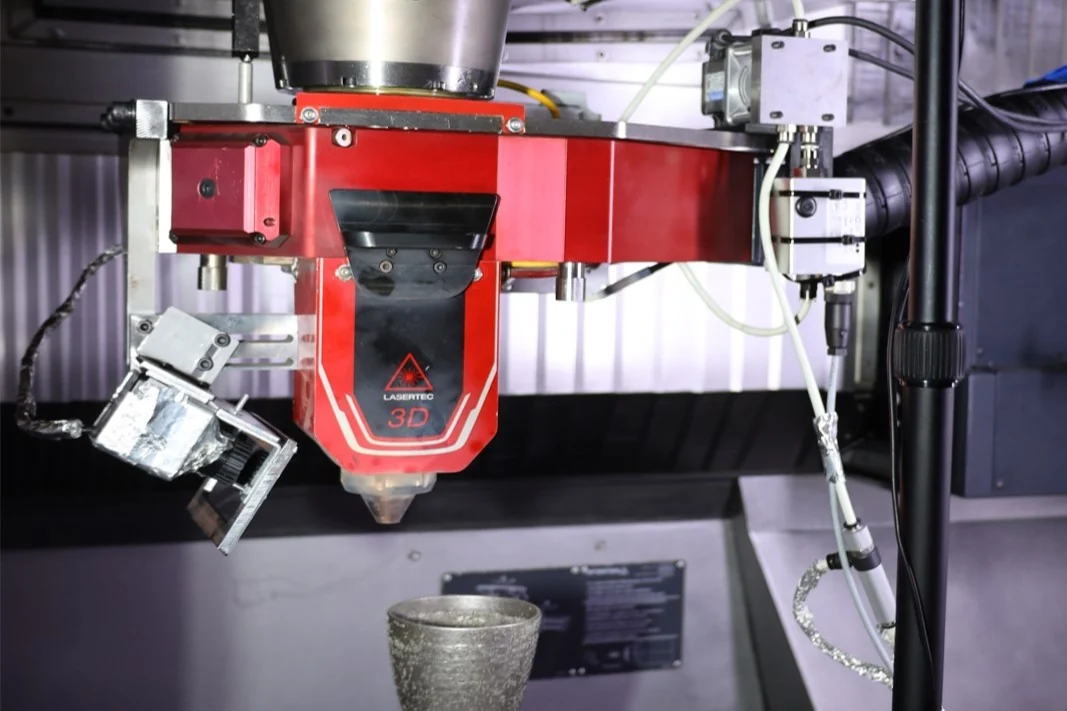
We investigate how CNC machining and directed energy deposition can be combined to build and finish parts, linking process planning, deposition control, and experimental measurement.
Explore the research
Study the process. Examine the part.
Process planning
Investigate the relationship between material addition and material removal.
Deposition control
Explore how process decisions affect the deposited material.
Experimental measurement
Use instrumented experiments to examine process behavior.
Example research / Grid molding
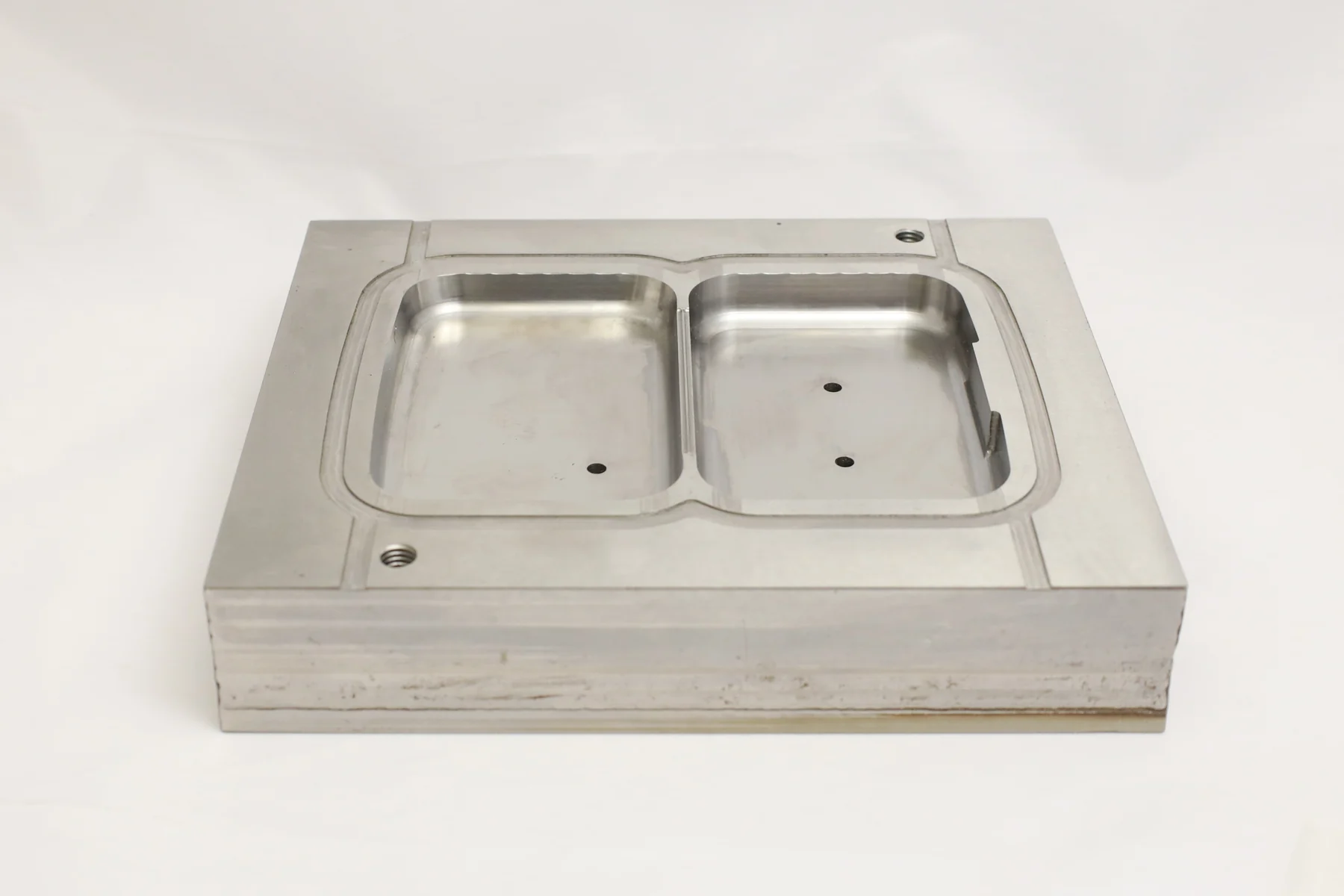
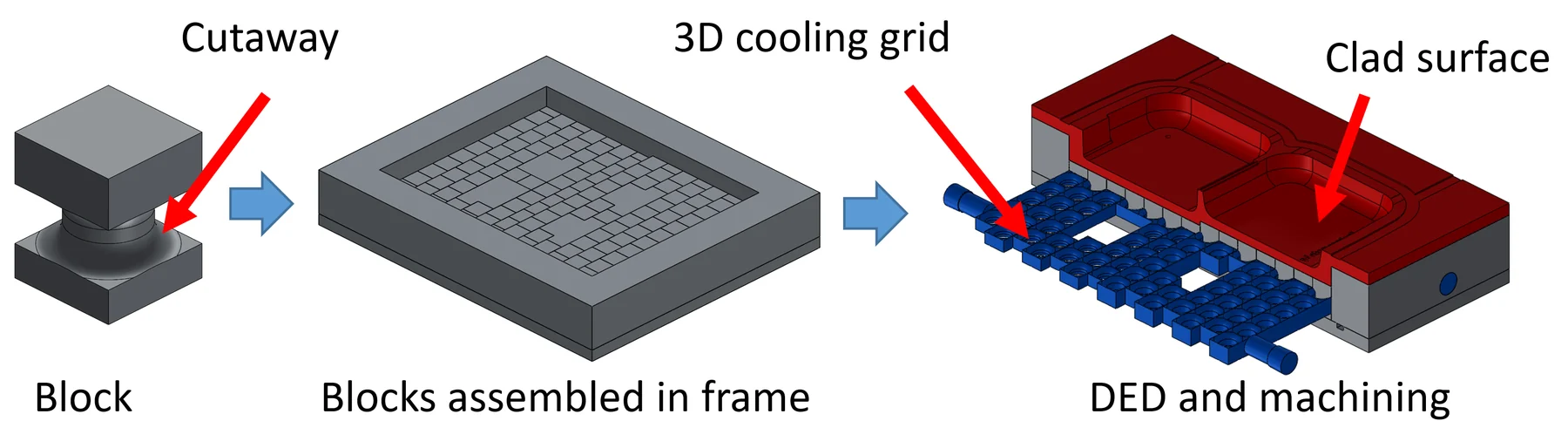
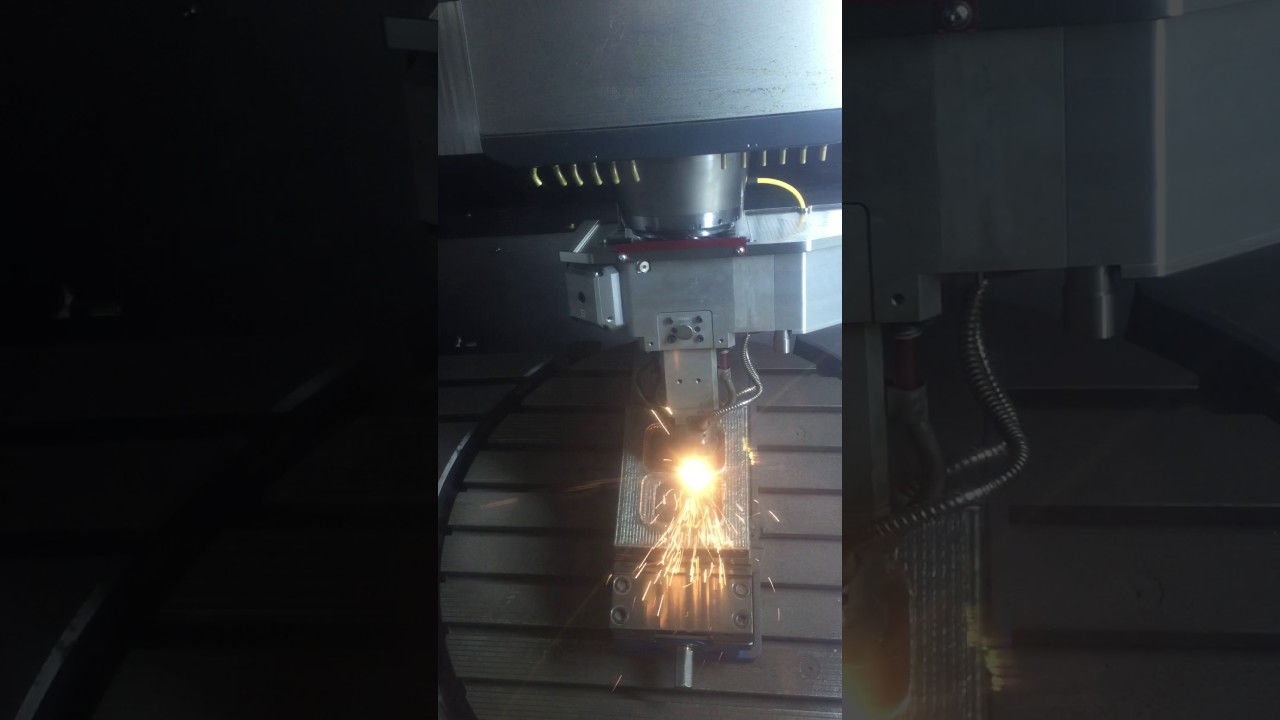
Conformal grid plastic injection mold fabricated by machining/DED hybrid manufacturing
Problem
Effective cooling is essential to injection-molding productivity and plastic-part dimensional accuracy. However, creating intricate cooling channels within a mold is challenging.
Approach
We begin with a prefabricated cooling-channel structure, then use hybrid directed energy deposition (DED) and machining to build and finish the mold geometry above it. This approach incorporates complex internal cooling passages into the finished mold.
Demonstrated result
The prototype demonstrated substantially improved cooling performance, highlighting the potential of hybrid manufacturing to produce molds with more effective internal cooling.
Related paper
Example research / DED process control
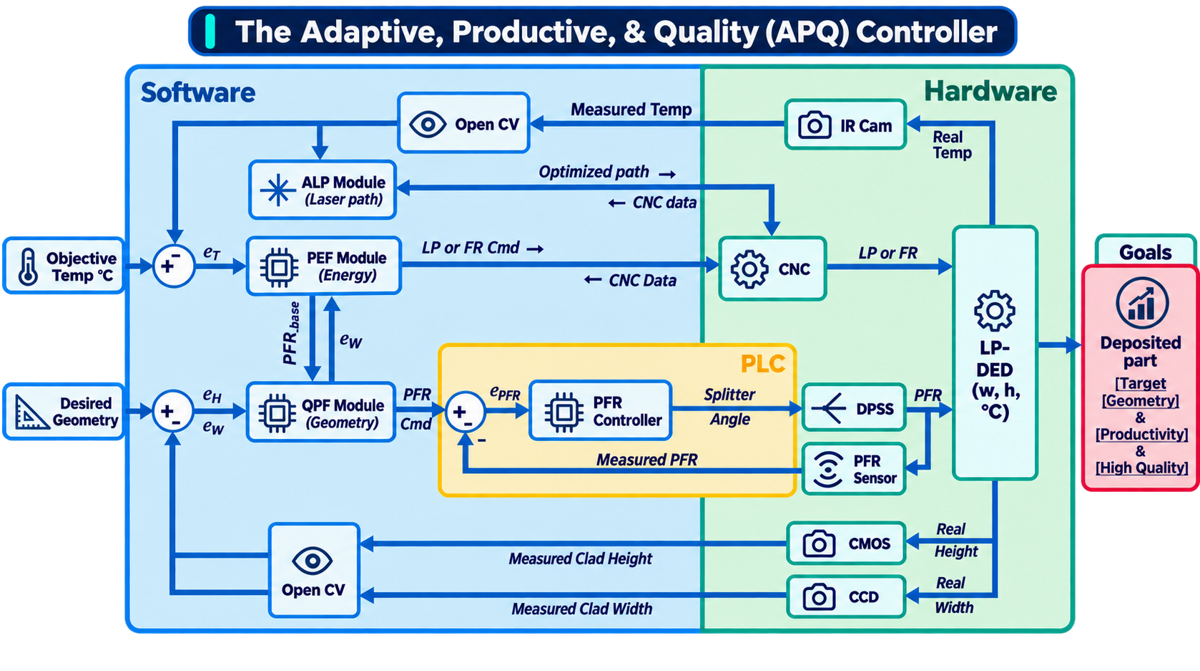
Adaptive, Productive, and Quality (APQ) control for directed energy deposition
Problem
DED often relies on preset laser power, machine feed rate, and powder flow. Actual deposition can deviate from the intended geometry, leaving insufficient material and requiring additional deposition—or restarting the build. A key challenge for closed-loop control is adjusting powder delivery quickly enough to correct these deviations.
Thermal management presents another challenge. The substantial heat input creates temperature gradients that can lead to distortion, cracking, and residual stresses.
Approach
ARMS developed a Dynamic Powder Splitting System (DPSS) that rapidly adjusts powder delivery, enabling responsive closed-loop deposition control. The broader Adaptive, Productive, and Quality (APQ) framework combines monitoring of deposition height, width, and temperature with coordinated regulation of energy fluence and powder fluence.
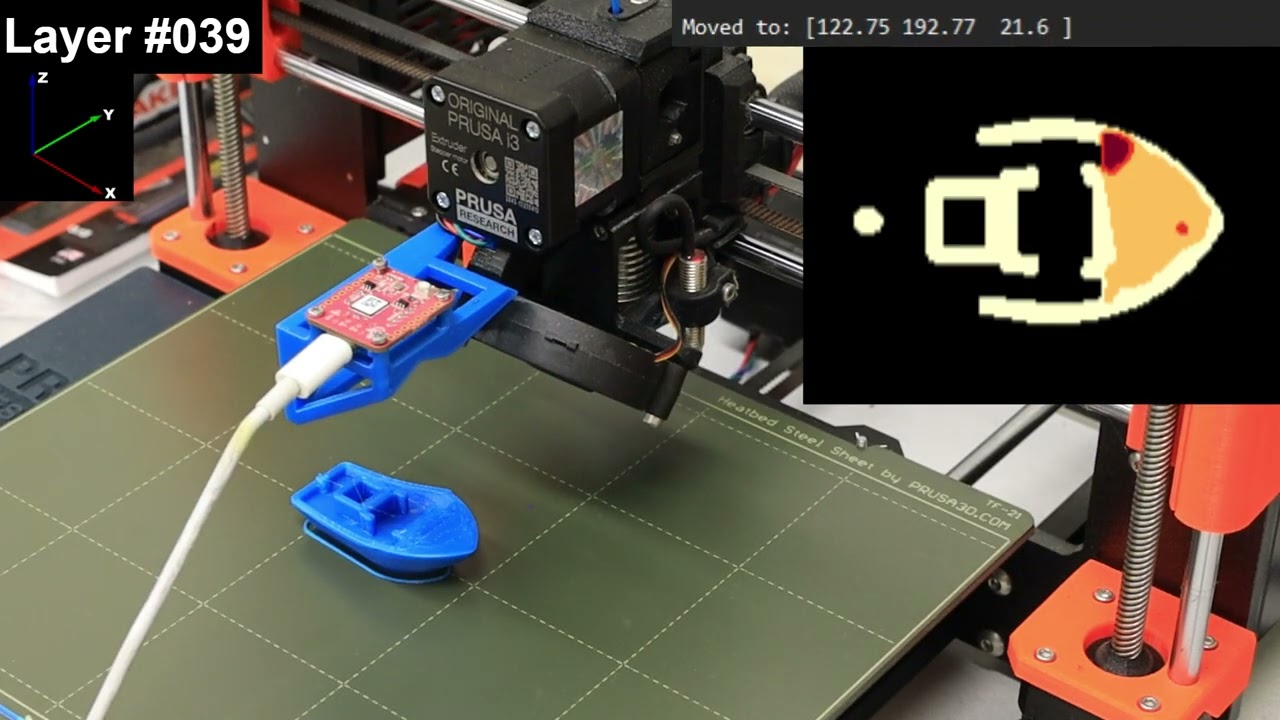
To address thermal gradients, the ALP module uses an infrared camera to assess the temperature distribution after each deposited layer. The controller then automatically reorders the deposition sequence in the supplied NC program to reduce temperature gradients.
Demonstrated result
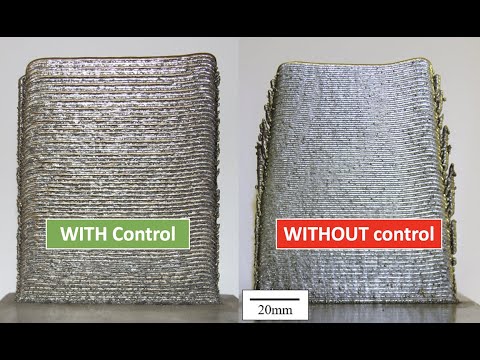
The developed control methods improved deposition productivity and geometric accuracy, while adaptive sequencing addressed thermal gradients during the build.
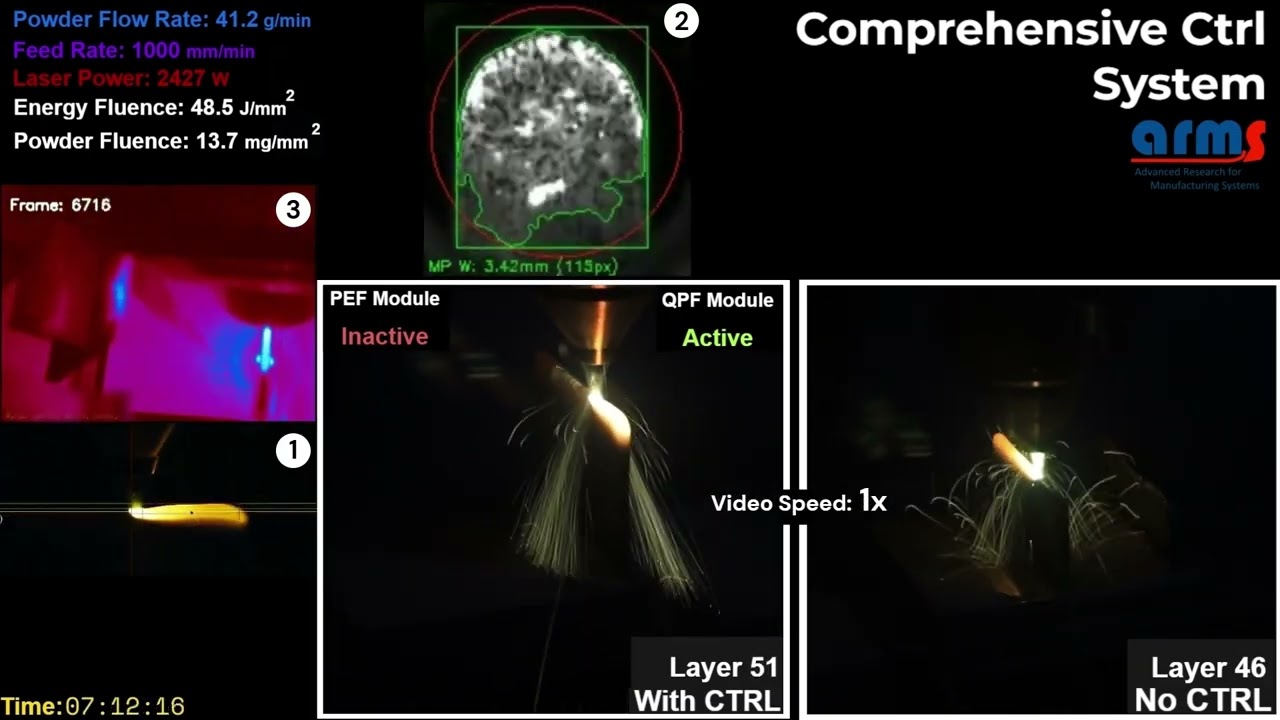
More DED demonstrations: powder delivery and thermal management
Related papers
- Productive Energy Fluence (PEF) controller using feed and laser hybrid control for Directed Energy Deposition (DED) ↗Journal of Manufacturing Processes, 142, 1–17 · 2025
- Adaptive toolpath for improved thermal management in additive manufacturing (AM) ↗Manufacturing Letters, 44, Supplement, 832–838 · 2025
- Development of a height control system using a dynamic powder splitter for directed energy deposition (DED) additive manufacturing ↗Progress in Additive Manufacturing · 2022
Example research / Process planning
Decision-support software for machining/DED process selection
Problem
Choosing between machining, DED, and a combined hybrid route requires evaluating competing manufacturing strategies. Detailed analysis can be time-consuming and depend heavily on specialized process knowledge.
Approach
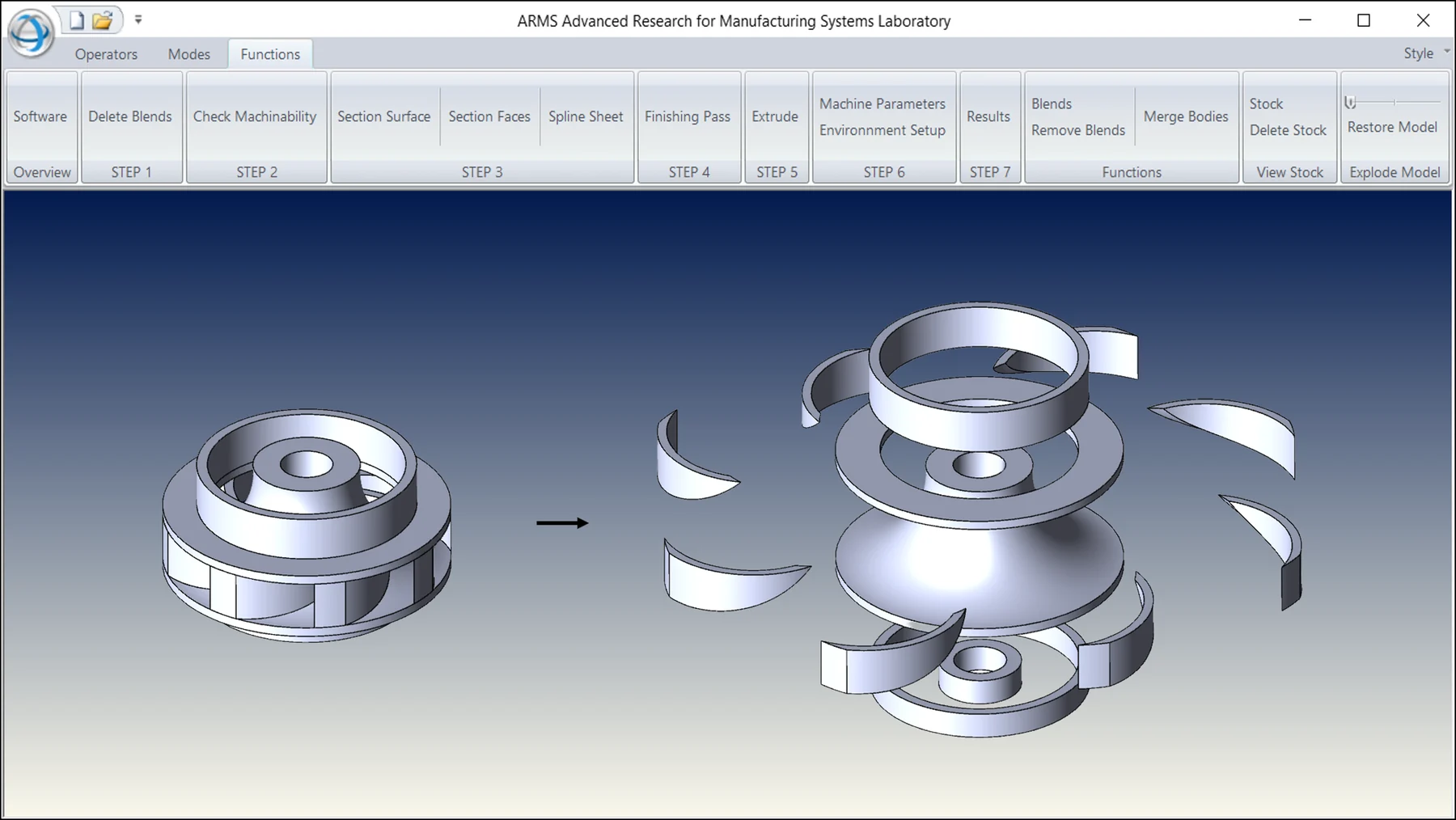
We develop software that analyzes a part’s geometry and rapidly evaluates candidate manufacturing routes. By comparing process time, material usage, and energy consumption before detailed CAM planning, the software helps users identify a suitable strategy.
Demonstrated result
The framework enabled faster manufacturing-route evaluation and decision-making, reducing the need for extensive preliminary planning.
Related paper
- Manufacturability-Driven Analytical Framework for Additive-Subtractive Hybrid Manufacturing Process Planning ↗The International Journal of Advanced Manufacturing Technology · 2026
Interested in hybrid manufacturing?
We welcome student inquiries and discussions of related industrial research challenges.